
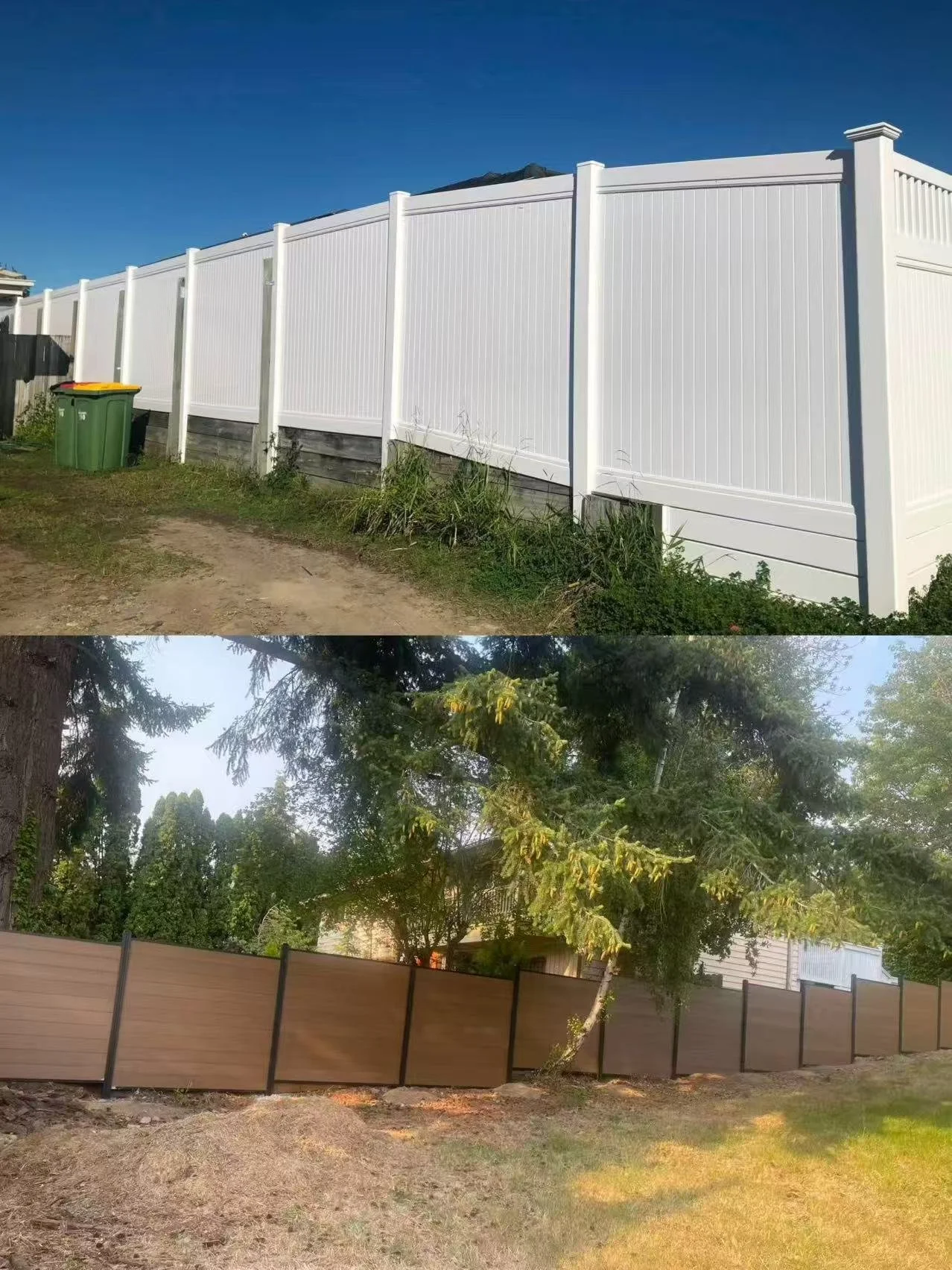
Both vinyl and WPC are low-maintenance fencing materials. Technically, they're both composite materials — just with different formulas: vinyl is a composite of PVC resin, calcium silicate, and titanium dioxide; WPC is a composite of wood powder, plastic powder, and stone powder. The main differences are appearance, structure, and price.
Vinyl: Clean, Bright, Worry-Free
Vinyl fencing uses vinyl resin as its primary material, with no wood powder. The surface is smooth and uniform. It won't rot like wood, and never needs painting or oiling. Common in white and tan, it's ideal for yards with a clean, bright aesthetic.
Our vinyl fence comes with a limited lifetime warranty covering fading, cracking, and warping.
WPC: Wood-Grain Texture with All-Aluminum Structure
WPC looks closer to real wood, with a visible grain texture — a good fit for yards favoring natural wood tones and warm colors.
Smart Fencing's WPC fence uses all-aluminum posts, top rails, and bottom rails, paired with WPC composite panels.
Our WPC fence is durable, needs no frequent washing or repainting, and comes with a 30-year structural warranty and 15-year fade warranty.
Color Limitations
One practical limitation of vinyl: it can't be made in very dark colors. Vinyl contains no wood powder and has a higher plastic content, so dark colors absorb more heat and cause it to deform under strong sunlight. WPC doesn't have this constraint — it can be produced in a wide range of colors, including dark wood tones.
Price Difference
WPC typically costs about double the price of vinyl. Two reasons: the posts and rails are all aluminum (vinyl uses PVC posts), and WPC panels themselves cost more to manufacture than vinyl panels — different materials, different process.
How to Choose?
If you like a clean, bright look and a friendlier budget, consider vinyl. If you prefer wood-grain texture and accept the premium that comes with the all-aluminum frame, consider WPC. Match your yard style, budget, and product specs to find your fit.